

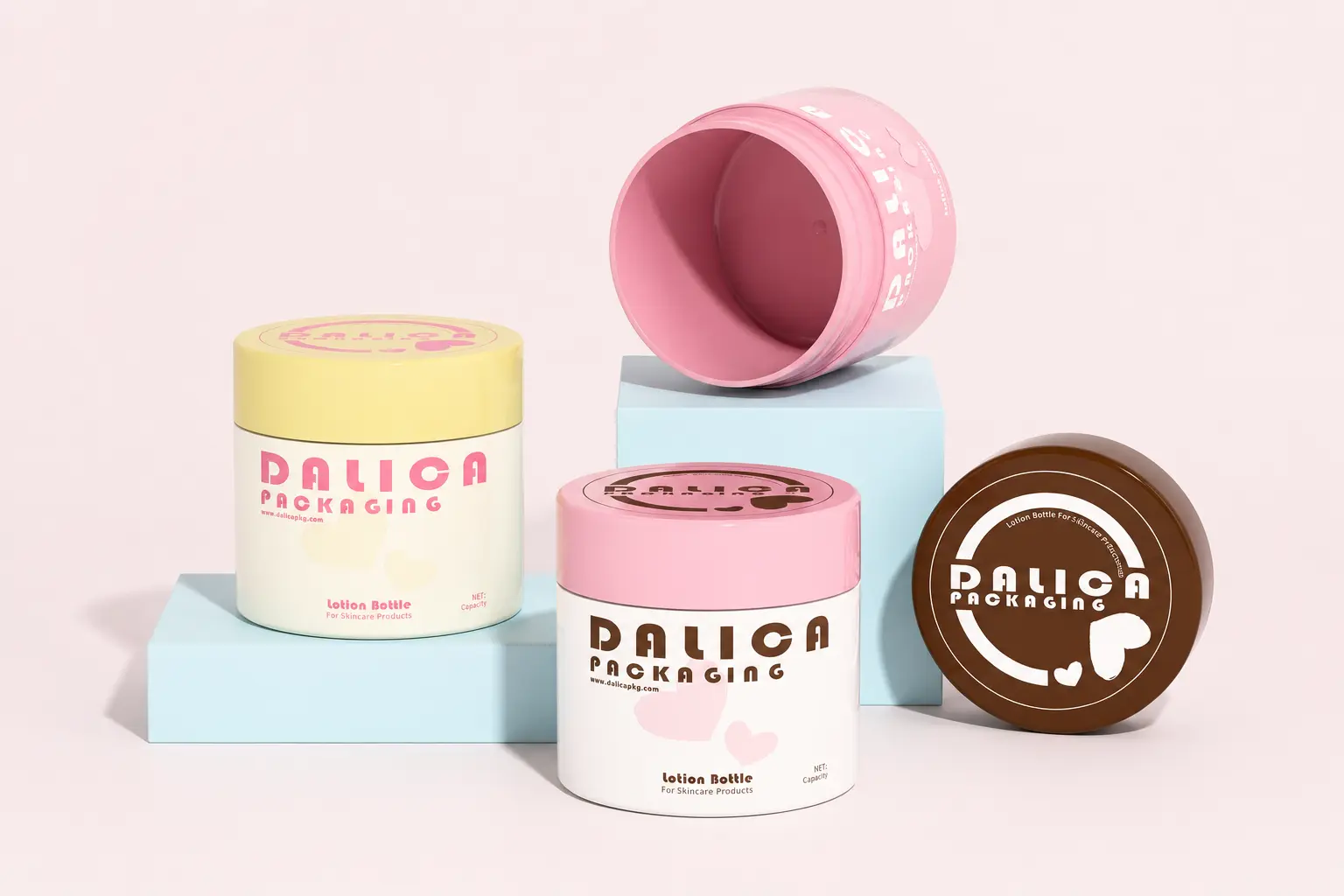
A PP cream jar is a lightweight, moulded packaging option for creams, balms, masks and other compatible skincare formulas. Polypropylene can support many jar structures and colours, but the material name alone does not guarantee formula compatibility, sealing performance or recyclability. Brands should evaluate the complete jar with the finished product before approving production.
Why Consider a PP Cream Jar?
PP has a low density compared with many common plastics, which can help create lightweight packaging. It is also widely used for moulded containers and closures. These properties make it practical for skincare projects that require a broad choice of shapes, capacities and colours.
A wide-mouth jar provides direct access to thick products that may be difficult to dispense through a pump. However, the user opens the formula to the surrounding environment during each use. Product preservation, instructions and any applicator therefore need to be considered as part of the complete system.
How to Select a PP Cream Jar
Confirm the Complete Jar Structure
Ask for the material of the outer jar, inner cup, lid, liner, sealing disc and any decorative parts. A jar described as PP may still contain components made from other materials. Identify the surface that contacts the formula and confirm the final construction on the approved sample.
Match Capacity to the Finished Formula
Nominal capacity and usable fill are not always identical. Product density, fill level, headspace and the shape of the inner cup affect the amount that fits. Run a filling trial before confirming the declared weight or volume.
Review the Closure System
Check the thread, liner or sealing disc and the way the lid is applied. Closing torque, fill residue and component tolerances can affect performance. Test filled jars in the positions and temperature conditions expected during storage and transport.
Choose Decoration After the Structure
Colour matching, screen printing, hot stamping, coating and labels can change the appearance of a PP cream jar. Availability depends on the selected model and surface. Approve decoration on a production-representative component and check alignment, adhesion and wear.
Which Formulas Can Be Evaluated in PP Cream Jars?
| Product type | Why a jar may be considered | Important checks |
|---|---|---|
| Face cream | Direct access to medium or thick textures | Compatibility, closure and preservation |
| Cleansing balm | Wide opening for scooping firm formulas | Oil interaction, liner and leakage |
| Body butter | Suitable access for dense products | Usable fill, transport and cap fit |
| Mask or scrub | Easy access to viscous or textured formulas | Particle contact, sealing and user instructions |
| Hair treatment | Convenient for larger fill sizes | Formula compatibility and wet-use handling |
These are possible applications rather than compatibility guarantees. Resin grade, additives, formula ingredients, storage time and temperature all influence package performance.
What Tests Should Be Completed Before Production?
- Check the finished formula for changes in colour, odour, texture and appearance.
- Inspect the jar for swelling, stress, distortion or surface changes.
- Evaluate the lid, liner and sealing disc as an assembled system.
- Record fill amount, closing method, sample size and test conditions.
- Assess decoration after filling, storage and representative handling.
- Confirm transport performance using the intended secondary packaging.
Use acceptance criteria agreed by the brand, filler and packaging supplier. A general statement such as “compatible” or “leak-proof” is incomplete unless it identifies the formula, model and test conditions.
Is a PP Cream Jar Recyclable?
PP has established recycling streams in some markets, but recyclability must be assessed for the finished package. Colour, labels, inks, coatings, liners and mixed-material components can affect sorting and recycling. The RecyClass design guidelines evaluate these features for specific plastic streams.
A mono-material claim should cover the complete package, not only the main jar body. Local collection and sorting access also matters. Use precise, market-specific language instead of assuming that every PP jar will be recycled.
PP Cream Jar vs Glass Jar
A PP jar is generally lighter and less prone to shattering than glass. Glass can provide a different weight, appearance and barrier profile. Neither material is automatically the better choice: compare formula protection, user experience, transport, decoration and the actual end-of-life system for the target market.
Frequently Asked Questions
Is PP Compatible with Every Skincare Formula?
No. PP is used with many products, but compatibility depends on the resin grade, complete package and finished formula. Test the intended combination under relevant conditions.
Can a PP Cream Jar Be Refilled?
Only describe it as refillable when the package is designed and tested for repeated use and a practical refill format is available. A jar that can be manually cleaned is not automatically a validated refill system.
What Information Should Be Sent with a Sample Request?
Provide the formula type, target fill, preferred capacity, colour, decoration, target market and expected order quantity. Include any compatibility, transport or documentation requirements.
Explore Dalica PP Cream Jars
Browse Dalica’s plastic cream jar range, then use the contact page to request PP samples for filling, compatibility and closure testing.

 Chat on WhatsApp