
Showing all 9 resultsSorted by latest





What Is a Spray Bottle?
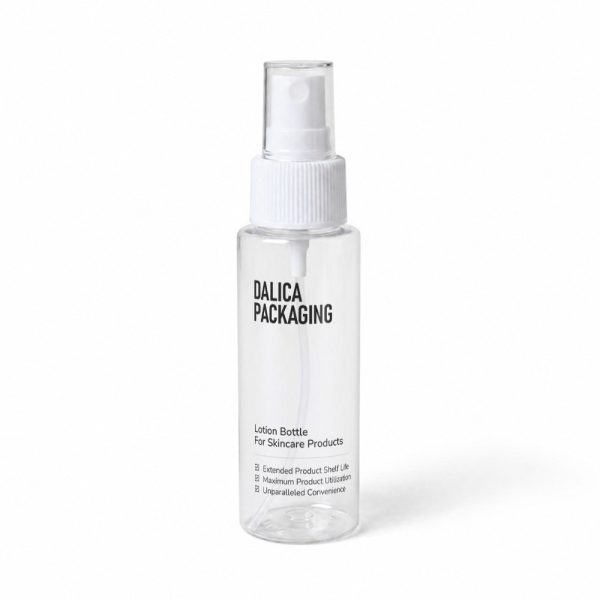
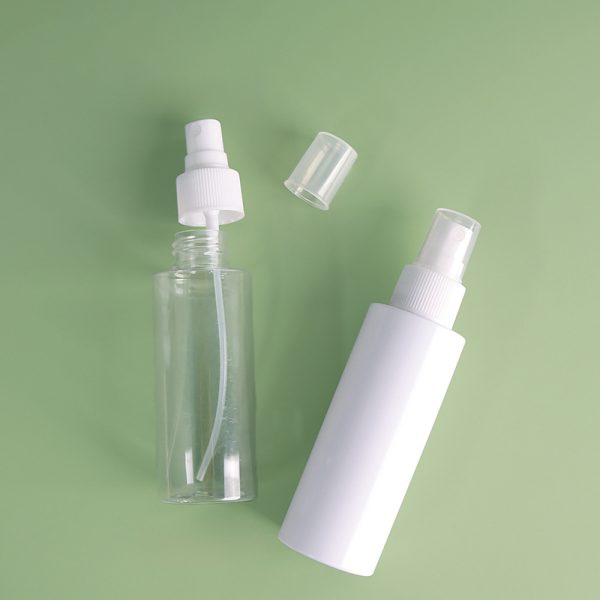
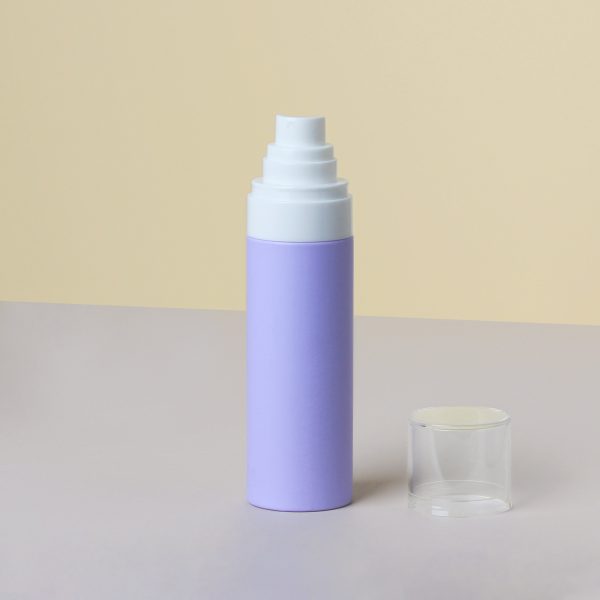
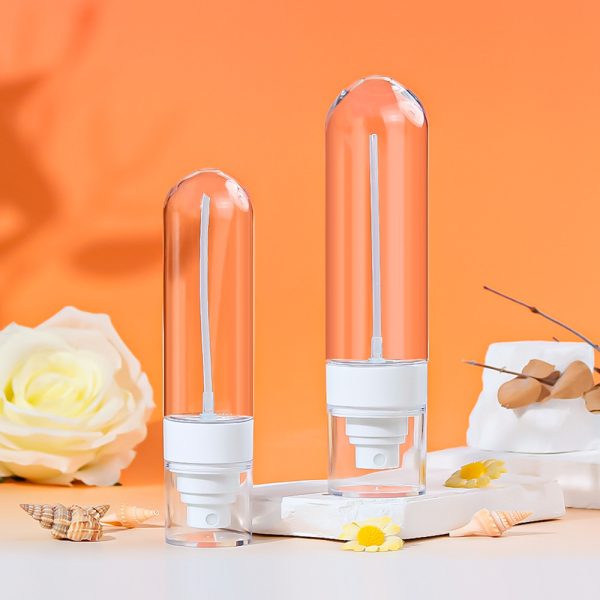
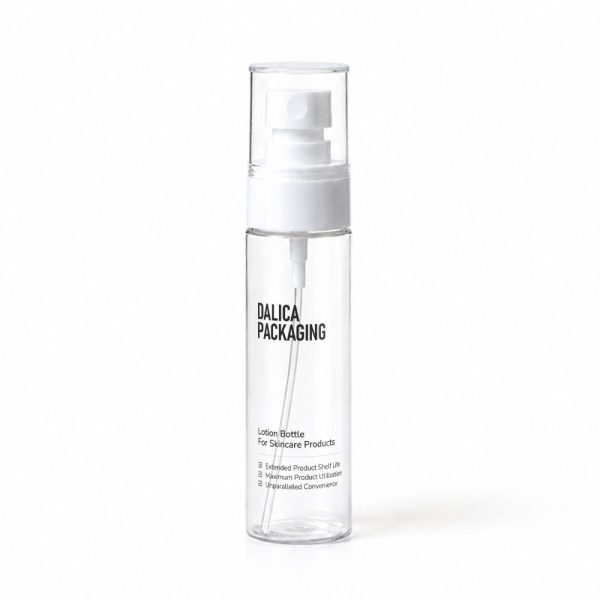
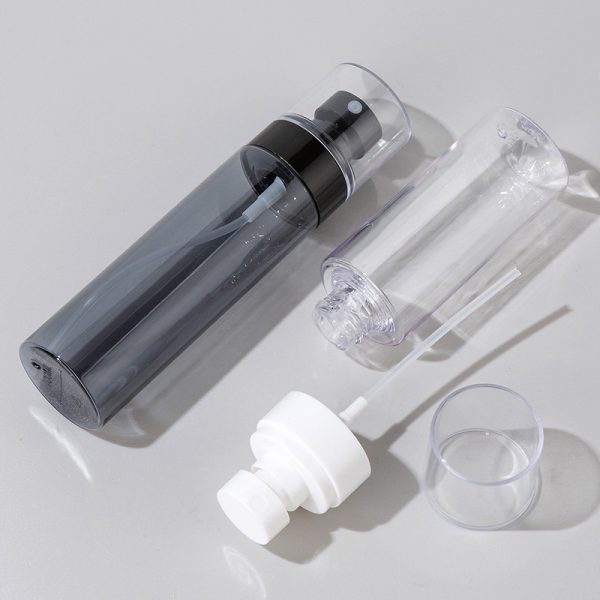
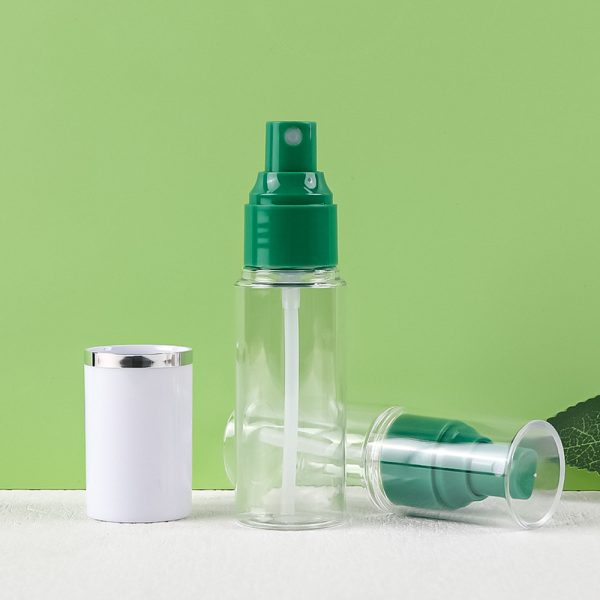
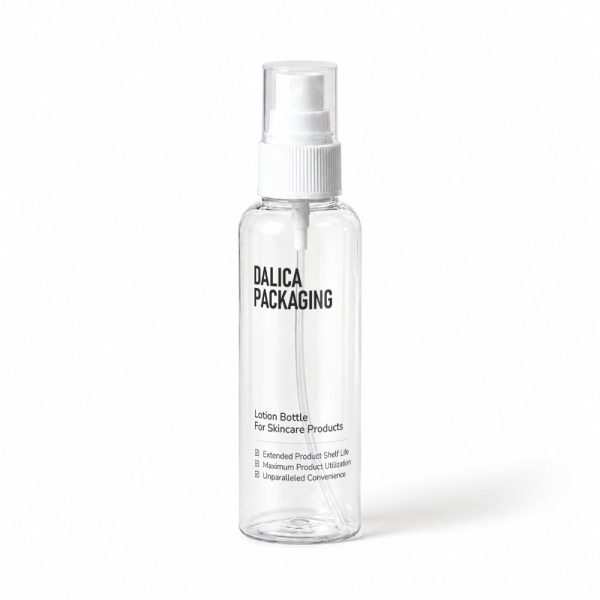
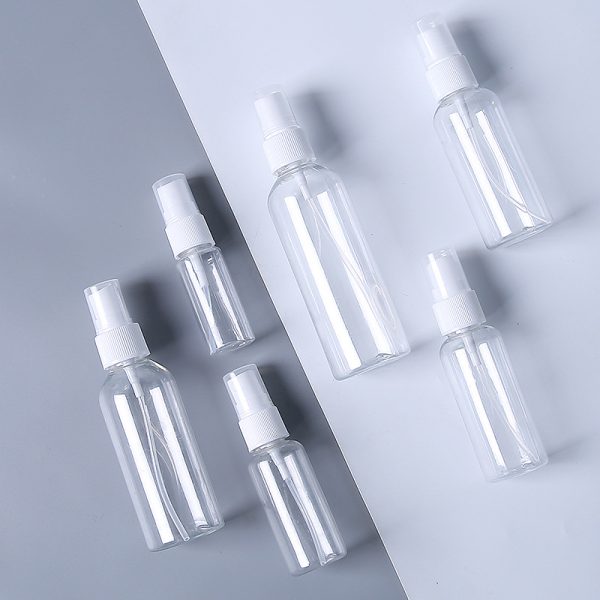
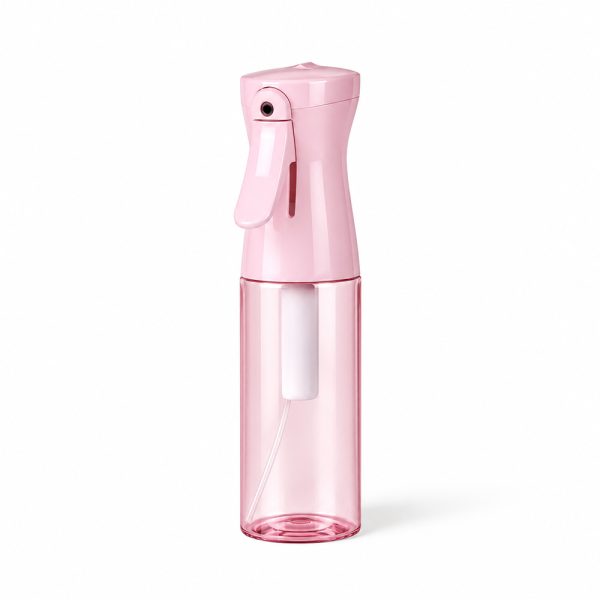
A spray bottle is a liquid packaging container fitted with a pump and nozzle that dispense the formula as a mist or spray. The bottle holds the product, while the spray head determines how it is distributed during application.
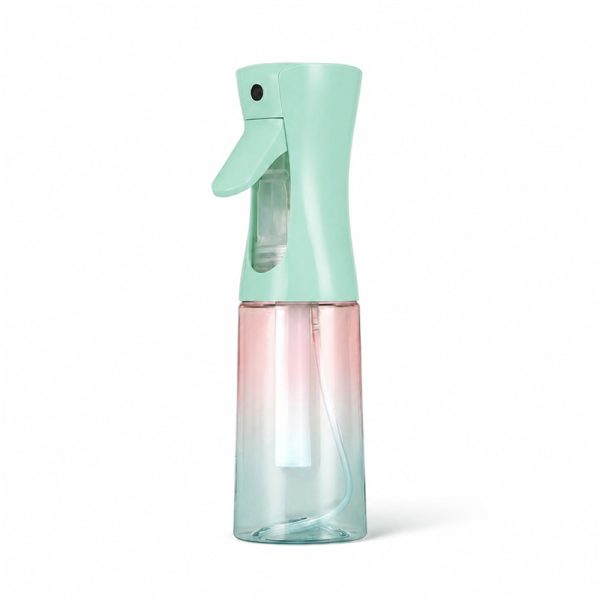
Dalica’s spray bottle collection includes conventional spray bottles, ultra-fine mist bottles, and continuous spray bottles. Available designs range from compact straight-sided bottles to larger trigger-operated formats for haircare and personal care applications.
The right package depends on the formula, desired spray pattern, capacity, and user experience. Bottle appearance alone does not determine spray quality; the pump, nozzle, and formula need to work together.
Types of Spray Bottles by Sprayer Design
1. Conventional Spray Bottles
Conventional spray pumps deliver a separate spray with each press of the actuator. They offer straightforward operation for everyday liquid skincare and personal care products.
This collection includes round-shoulder, flat-shoulder, and straight-sided designs, represented by PB01S, PB03S, and PB10S.
Their advantages include:
-
- Simple operation: Each press produces an individual spray, allowing users to apply the product gradually.
-
- Flexible presentation: Different shoulder profiles and bottle proportions suit a variety of brand styles.
-
- Practical size options: Compact and larger capacities support travel products and daily-use ranges.
Conventional sprayers are a useful starting point for toners, refreshing sprays, and body mists. The selected pump should be tested for the required output and coverage.
2. Ultra-Fine Mist Spray Bottles
Ultra-fine mist sprayers are designed to distribute compatible liquid formulas as a finer mist. They are particularly relevant when a gentle application and even coverage are important.
Options in this collection include the PB05S fine mist setting spray bottle, PB06S inverted fine mist bottle, and PB09S compact fine mist bottle.
Their advantages include:
-
- A lighter application feel: A fine mist can help reduce the sensation of large droplets landing on the skin.
-
- More even distribution: Suitable atomization helps spread the formula across the intended area.
-
- Beauty-focused formats: Compact sizes and different bottle profiles support facial mist and makeup-setting products.
“Ultra-fine” describes the intended spray performance. Actual droplet behavior, spray angle, and output depend on the selected nozzle and finished formula.
3. Continuous Spray Bottles
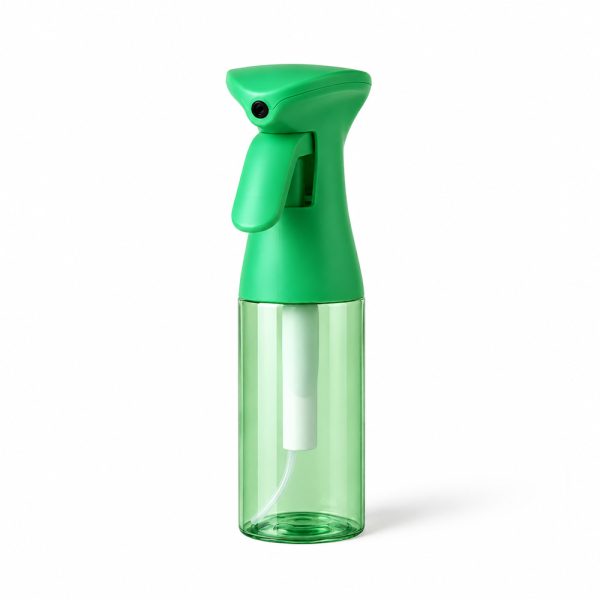
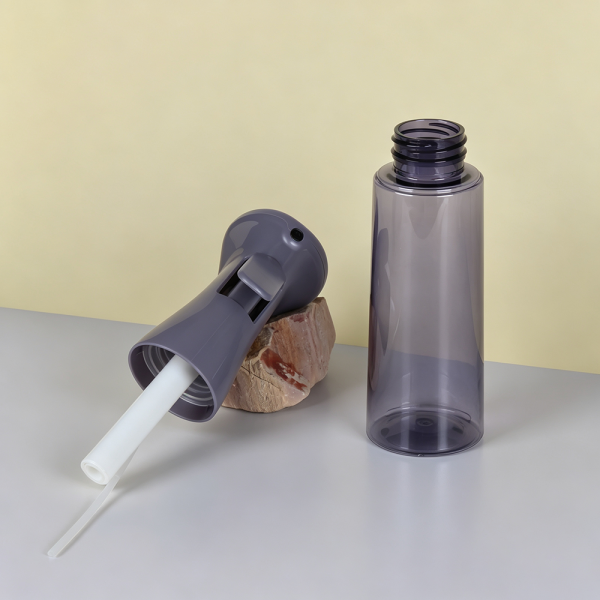
Continuous spray bottles use a trigger-operated mechanism to deliver a more sustained spray than a conventional single-press pump. Depending on the mechanism, repeated trigger strokes can maintain the spray across a larger area.
The collection includes PBS01 and PBS02 in 200 ml, 300 ml, and 500 ml formats, together with the compact PBS03 100 ml continuous spray bottle.
Their advantages include:
-
- Convenient coverage: A sustained spray helps users cover hair or other intended areas with fewer interruptions.
-
- Trigger operation: The handle provides an alternative to a small finger-operated actuator.
-
- Compact and larger formats: Different capacities suit portable products and salon-oriented applications.
Continuous spray describes the delivery pattern, while ultra-fine mist describes atomization. These features can overlap. Spray duration and mist quality should be confirmed with the selected model and formula.
Common Uses of Spray Bottles
1. Facial Mists and Spray Toners
Spray bottles provide a convenient format for applying lightweight liquid skincare products. Ultra-fine mist options are worth evaluating when the product brief calls for gentle, evenly distributed facial application.
Choose the sprayer according to the intended application distance, coverage, and amount delivered per press.
2. Makeup Setting Sprays
Setting-spray packaging needs to distribute the formula without excessive wet spots or concentrated droplets. PB05S is one option in this collection developed for evaluating this application.
Testing should assess the spray on the intended makeup finish, as well as pump priming, nozzle performance, and material compatibility.
3. Haircare and Salon Applications
Continuous spray bottles are useful for hair dampening and compatible liquid haircare products. PBS01 and PBS02 offer larger capacities for repeated use, while PBS03 provides a smaller alternative.
Check grip comfort, trigger effort, spray coverage, and performance with the intended liquid.
4. Body Mists and Personal Care Sprays
Conventional and fine mist bottles can also be evaluated for body mists, refreshing sprays, and compatible fragrance-based products.
Formulas containing alcohol, fragrance oils, or other solvents require compatibility testing with the bottle, seals, and pump components before production.
5. Sun Care Sprays
Spray bottles can also be evaluated for compatible liquid sun care formulas. Conventional spray models such as PB01S and PB03S provide options for brands developing this packaging format.
The bottle and sprayer should be tested with the finished formula for material compatibility, spray pattern, output, and leakage. Oils, solvents, or dispersed particles may affect performance. Application directions should follow the finished product’s validated use instructions.
Spray Bottle Capacities and Specifications
1. Available Capacities
This collection includes capacities from 30 ml to 500 ml, depending on the model.
-
- 30–80 ml: Compact formats for travel products and smaller personal care packs.
-
- 100–150 ml: Options for daily-use facial mists, setting sprays, and body products.
-
- 200–500 ml: Larger formats for frequent use, including continuous spray applications.
PB09S is listed in 1 and 2 fl oz sizes. Refer to individual product specifications for available capacities and dimensions.
2. Materials and Pump Matching
PET and HDPE bottle bodies can be considered according to the selected model and project requirements. Confirm the exact material, bottle dimensions, neck finish, and sprayer configuration before ordering.
Match the pump and dip tube to the bottle, then test the complete package with the intended formula for spray performance and sealing.
Customization and Finishing Options
Dalica can develop bottle colors and decoration to coordinate spray packaging with a skincare, makeup, or haircare range. Available processes depend on the selected PET or HDPE body, bottle shape, and surface preparation.
1. Custom Molded Colors
Color can be incorporated into the plastic during manufacturing to create the required bottle appearance. Depending on the material and design, options may include transparent tints, translucent colors, and opaque shades.
Pantone references or physical color samples can guide color development. Approve a sample in the intended material, since PET and HDPE can present the same color differently.
2. Exterior Spray Coatings
Exterior coatings provide additional color and texture options, including:
-
- Glossy colors: A reflective finish with a polished appearance.
-
- Matte colors: A low-gloss finish for a softer visual effect.
-
- Gradient colors: A transition between colors or levels of transparency.
-
- Soft-touch coatings: A coating that gives the bottle a smooth, tactile feel.
Coating suitability and durability should be checked on the selected bottle, including resistance to handling and incidental contact with the formula.
3. Metallic and Electroplated Effects
Metallic finishes can create reflective accents or a metal-like appearance on suitable components.
The appropriate process—such as vacuum metallization or a suitable plating system—depends on the substrate and component design. Availability should be confirmed for the specific PET or HDPE body rather than assumed across the collection.
4. Silk-Screen Printing and Hot Stamping
Silk-screen printing places logos, text, and graphics directly onto a suitable bottle surface. It works well for clear branding and relatively simple artwork.
Hot stamping adds metallic foil details to selected areas, such as a logo or product name. Achievable detail and placement depend on bottle curvature, surface finish, and tooling.
5. Labeling
Labels provide space for branding, ingredients, directions, and other product information. They are also useful when several products share the same bottle but require different artwork.
Label material, adhesive, and size should be matched to the bottle surface and use conditions. For HDPE bodies in particular, confirm adhesion through sample testing.
How to Choose the Right Spray Bottle
1. Start with the Formula
Share the formula characteristics and intended use before selecting a sprayer. Viscosity, alcohol content, oils, and suspended particles can affect material compatibility, liquid pickup, and atomization.
Test the actual formula in the complete package for priming, spray consistency, clogging, and leakage. Our guide to how formula and neck design influence pump selection provides additional background on matching formulas and dispensers.
2. Define the Required Spray Experience
Choose a conventional pump for separate, press-by-press application. Evaluate an ultra-fine mist sprayer when a lighter application is important, or a continuous sprayer when sustained coverage is the priority.
Compare samples at the intended application distance. Assess coverage, output, droplet behavior, and operating effort.
3. Match Capacity and Shape to Everyday Use
Select the filling volume according to the product’s usage rate and positioning. Then compare suitable bottle dimensions, grip, and storage requirements.
A compact bottle may suit a portable facial mist, while a larger trigger bottle may be more practical for repeated salon use. Confirm the operating orientation for each design; an inverted appearance does not automatically establish all-angle spraying.
4. Review Decoration, Cost, and Production Requirements
Choose finishes around the brand’s appearance, available artwork area, and target cost. Coatings, metallic effects, and multiple decoration processes can affect sampling, minimum quantities, and production schedules.
Approve the bottle, sprayer, color, artwork, and decorated sample together before mass production. Filled-pack testing should also confirm closure security and transport performance.
Frequently Asked Questions
1. What is the difference between conventional, ultra-fine mist, and continuous spray bottles?
A conventional pump produces a separate spray with each press. An ultra-fine mist sprayer focuses on finer atomization, while a continuous sprayer provides a more sustained delivery pattern.
Mist fineness and spray duration are separate characteristics, so a continuous sprayer may also produce a fine mist.
2. Which spray bottle should I choose for facial mist or setting spray?
Ultra-fine mist models such as PB05S, PB06S, and PB09S are options to evaluate. The best choice depends on the formula, required coverage, filling volume, and application experience.
Confirm performance with the finished formula before selecting a model.
3. Can these bottles dispense oils or thicker liquids?
Suitability depends on the formula and sprayer. Oils, thicker liquids, and suspended particles can affect spray quality or obstruct the nozzle.
Provide formula details and test samples before confirming the packaging.
4. What capacities are available?
The collection includes listed sizes from 30 ml to 500 ml, depending on the model. PB09S is listed in 1 and 2 fl oz formats.
Refer to the selected product’s specifications for exact capacities and dimensions.
5. Can PET and HDPE spray bottles be customized?
Customization can include molded colors, glossy or matte exterior coatings, gradients, soft-touch finishes, suitable metallic effects, silk-screen printing, hot stamping, and labels.
Process availability depends on the selected material and bottle design. Decorated samples should be approved before production.
6. What is the minimum order quantity?
The standard minimum order quantity is generally 10,000 units, subject to confirmation for the selected bottle and sprayer configuration.
Custom colors, complex decoration, or new tooling may have additional requirements. Confirm the MOQ for each size and decoration option when requesting a quotation.
7. Can I receive samples before ordering?
Under Dalica’s existing sample policy, 3–5 existing samples can be provided free of charge, with shipping paid by the customer.
Customized samples are chargeable. The fee depends on the requested colors, decoration processes, and quantity. Confirm sample availability for the selected spray bottle.
8. How long do sampling and production take?
Customized sampling generally takes 7–15 days, depending on the model and decoration. Some products, including PB05S, list a typical customized sampling time of 7–10 days.
For planning, allow approximately 30–40 days for production after artwork, color, and sample approval, subject to order quantity and finishing requirements. New tooling and complex decoration require a separately confirmed schedule. Contact Dalica to confirm the timing for your project.

 Chat on WhatsApp