

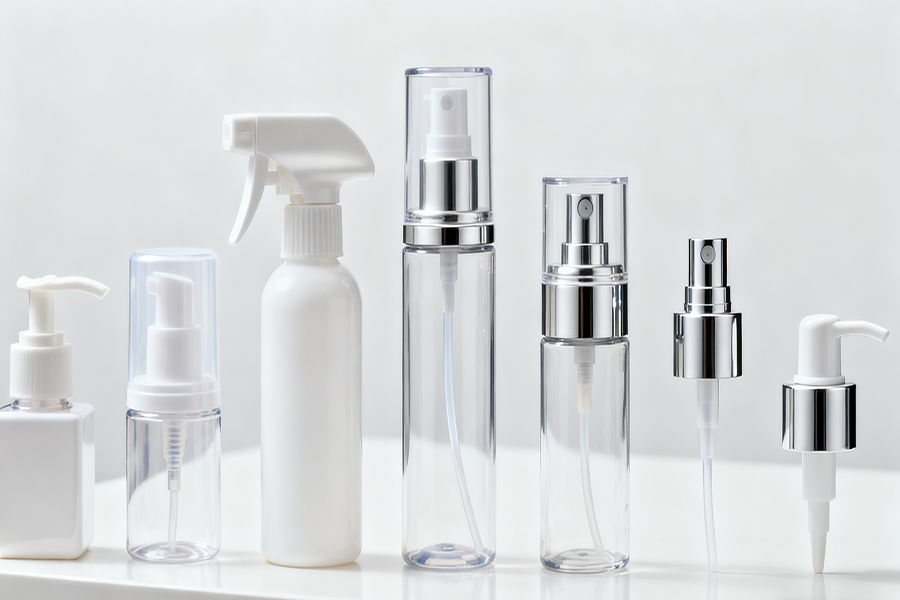
In the cosmetics packaging industry, the lotion pump is more than just a functional component—it is a bridge between product quality and user experience. A well-matched lotion pump ensures smooth dispensing, preserves formula integrity, and enhances brand perception. However, selecting the right lotion pump is not a one-size-fits-all process; it heavily depends on two core factors: bottle neck design and product formula characteristics. This article breaks down how these elements influence pump selection and provides actionable guidelines for cosmetics brands.
1. How Bottle Neck Design Shapes Lotion Pump Selection
The bottle neck is the direct interface between the pump and the container. Its dimensions, shape, and material determine which pump models are compatible, as well as the pump’s stability and dispensing efficiency.
1.1 Neck Diameter: The Fundamental Compatibility Criterion
Neck diameter is the most critical factor in pump selection, as it dictates whether the pump can physically fit the bottle. Cosmetic bottles typically use standard neck sizes, but deviations are common for custom packaging.
- Standard Neck Sizes: Most lotion bottles follow industry standards such as 24/410, 28/410, or 32/415 (where the first number is the neck diameter in millimeters, and the second refers to thread specifications). For example, a 24/410 neck requires a pump with a 24mm mounting diameter. Using a pump with a smaller diameter will cause leakage, while a larger one will not fit at all.
- Custom Neck Sizes: For unique bottle designs (e.g., slim or wide-mouth containers), custom pumps are necessary. For instance, a 18mm narrow neck (common in travel-sized serums) needs a miniaturized pump with a reduced mounting collar, while a 40mm wide neck (used for body lotions) requires a high-capacity pump with a wider base to ensure stability.
1.2 Neck Shape: Impact on Pump Installation and Sealing
Neck shapes vary from straight-sided to tapered or stepped, each affecting how the pump attaches and seals:
- Straight-Sided Necks: The most common design, ideal for pumps with a smooth, cylindrical mounting sleeve. They provide uniform contact pressure, ensuring a tight seal against leakage—critical for water-based lotions or serums.
- Tapered Necks: Often used in premium packaging for aesthetic appeal. These require pumps with a conical mounting collar that matches the taper angle (e.g., 5° or 10°). A mismatched angle will result in loose fitting, leading to air ingress or formula oxidation.
- Stepped Necks: Feature a small ledge (step) near the top, used to secure the pump’s locking ring. Pumps for stepped necks must have a corresponding groove in the mounting sleeve to grip the step, preventing the pump from twisting or popping out during use.
1.3 Neck Material: Ensuring Chemical Compatibility
Bottle necks are usually made of PET, PP, or glass. The material affects the pump’s sealing material choice:
- PET/PP Necks: These plastic materials are compatible with most pump sealing rings made of nitrile rubber (NBR) or thermoplastic elastomer (TPE). NBR offers excellent resistance to oil-based formulas (e.g., moisturizing lotions with mineral oil), while TPE is more flexible and suitable for water-based products.
- Glass Necks: Glass is inert but has a smoother surface than plastic. For glass necks, pumps with silicone sealing rings are recommended—silicone adheres better to glass, creating a tighter seal and avoiding scratches that could compromise leakage resistance.
2. How Product Formula Characteristics Influence Lotion Pump Selection
The lotion’s viscosity, ingredients, and particle content directly affect the pump’s dispensing performance, durability, and formula preservation. Choosing a pump without considering these factors can lead to clogging, inconsistent dosage, or even formula degradation.
2.1 Viscosity: Determines Pump Pressure and Dispensing Mechanism
Viscosity (measured in centipoise, cP) refers to the lotion’s thickness. It is the primary factor in selecting the pump’s internal structure:
- Low-Viscosity Formulas (100–500 cP): Includes serums, toners, and lightweight lotions. These require pumps with a smaller dip tube diameter (3–5mm) and a low-pressure spring to prevent over-dispensing. For example, a serum pump should dispense 0.2–0.3ml per press to avoid wasting product. A pump designed for thick lotions would dispense too much of a low-viscosity formula, leading to user frustration.
- Medium-Viscosity Formulas (500–5,000 cP): Encompasses most daily moisturizers and body lotions. Standard pumps with a 5–8mm dip tube and a medium-tension spring work best here. These pumps deliver 0.5–1.0ml per press, balancing usability and product economy.
- High-Viscosity Formulas (5,000+ cP): Includes thick creams, balms, or lotions with high oil content. These require high-pressure pumps with a larger dip tube (8–12mm) and a wide internal flow channel. Some models even feature a “vacuum assist” design to draw thick formulas up the tube, preventing clogging. For example, a body butter pump needs to withstand 2–3x more pressure than a standard pump to ensure smooth dispensing.
2.2 Formula Ingredients: Avoiding Chemical Degradation
Certain ingredients in lotions can react with the pump’s internal components, leading to damage or contamination:
- Alcohol or Acids (e.g., hyaluronic acid, salicylic acid): These ingredients are corrosive to metal parts. Pumps for such formulas must use stainless steel 316 (instead of 304) for the dip tube and piston, as 316 offers superior corrosion resistance. The sealing ring should also be made of EPDM rubber, which is resistant to acidic environments.
- Oil-Based or Silicone-Based Formulas: Oils and silicones can swell or degrade rubber seals. Pumps for these products should use fluorinated rubber (FKM) seals—FKM is chemically inert and can withstand long-term exposure to oils without losing elasticity.
- Preservatives (e.g., parabens, phenoxyethanol): While preservatives protect the formula, some can leach into low-quality plastic pump components. Opt for pumps made of food-grade PP or ABS plastic, which are non-porous and prevent preservative migration.
2.3 Particle Content: Preventing Clogging
Lotions with physical exfoliants (e.g., sugar scrubs, bead-infused serums) or mineral particles (e.g., zinc oxide in sunscreens) require specialized pumps to avoid clogging:
- Large Particles (>100μm): Choose pumps with a wide flow channel (6–8mm) and a “nozzleless” or wide-opening dispenser. The dip tube should also have a filter screen at the bottom to catch large particles before they enter the pump mechanism.
- Fine Particles (<100μm): Even small particles (e.g., titanium dioxide in tinted lotions) can accumulate in narrow pump valves. Pumps with self-cleaning valves (featuring a flexible silicone flap that wipes away particles with each press) are ideal here. Additionally, using a transparent dip tube allows brands to monitor particle buildup and adjust the formula if needed.
3. Practical Guidelines for Matching Pumps to Bottles and Formulas
To simplify the selection process, follow these steps:
- Define Core Specifications: First, confirm the bottle’s neck diameter, shape, and material, as well as the formula’s viscosity, ingredients, and particle size.
- Prioritize Compatibility Tests: Before mass production, conduct leakage tests (fill the bottle with water and invert it for 24 hours) and dispensing tests (press the pump 500+ times to check consistency).
- Consider User Experience: For example, travel-sized bottles need pumps with a “lock” feature to prevent accidental dispensing, while premium products may benefit from pumps with a soft, quiet press mechanism.
- Leverage Customization: If standard pumps do not fit, work with a packaging supplier to customize the pump’s mounting sleeve, dip tube length, or dispenser design.
Conclusion
Selecting the right lotion pump requires a holistic understanding of both bottle design and formula characteristics. A mismatched pump can undermine product quality, increase return rates, and damage brand reputation. By prioritizing neck compatibility, formula resistance, and user-centric design, cosmetics brands can ensure their products deliver a seamless, reliable experience—from the first press to the last drop.
At Dalica Packaging, we offer a wide range of standard and custom lotion pumps tailored to diverse bottle designs and formula needs. Our team of packaging experts can help you test, select, and customize pumps that align with your brand’s goals. Contact us today to discuss your project!

 Chat on WhatsApp